Decoding Mental Game Adjustments Influence on Capital Allocation Choices Amidst Repeated High-Pressure Decisions
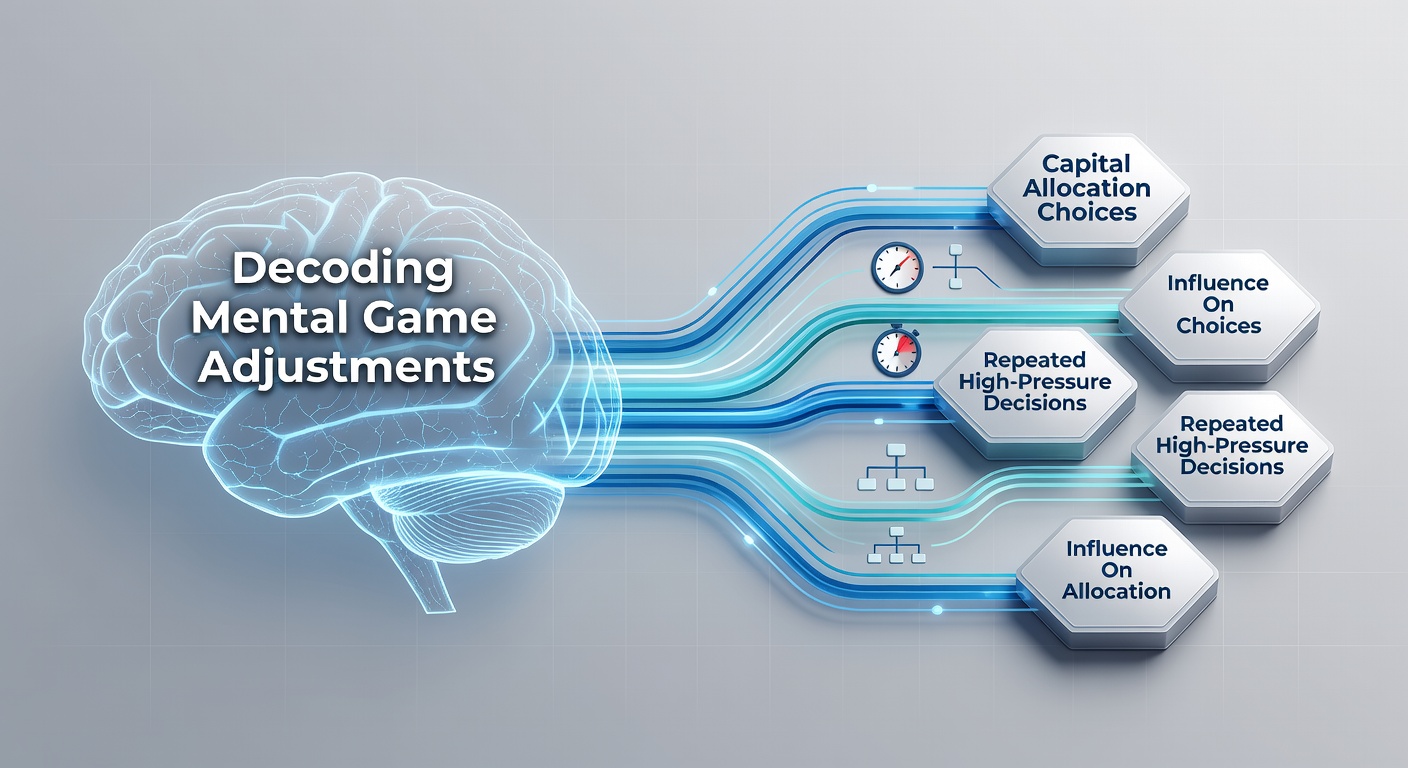
High-pressure environments in poker and finance share core mechanics where repeated decisions under uncertainty shape how capital gets allocated over time, and mental game adjustments play a central role in those processes according to multiple behavioral studies. Observers note that players and investors alike face sequences of choices where emotional regulation directly impacts bet sizing, position management, and overall resource distribution, while data from longitudinal tracking shows measurable differences in outcomes when specific cognitive techniques get applied consistently.
Core Mechanisms Linking Mental Adjustments to Allocation Patterns
Researchers at institutions such as the University of Toronto have documented how adjustments in mental framing alter risk perception during consecutive high-stakes rounds, leading to shifts in how funds move across different asset categories or table positions. Those adjustments often involve reframing losses as data points rather than personal setbacks, which then influences subsequent capital deployment by reducing overcommitment to single lines of play or investment vehicles. Evidence from controlled simulations reveals that participants who practiced these reframes maintained more balanced allocation across multiple opportunities instead of concentrating resources after early variance.
What's interesting is the way repeated exposure compounds these effects, because each cycle of decisions builds new reference points that either reinforce or erode disciplined distribution strategies. Studies tracking professional cohorts over multi-month periods indicate that individuals incorporating breathing protocols and visualization routines before each decision point exhibited steadier capital curves, whereas those without such routines showed sharper drawdowns followed by compensatory over-allocation in later stages.
Patterns Observed in Tournament and Market Settings During 2026
May 2026 brought another wave of major poker festivals alongside fluctuating market conditions, providing fresh datasets for analysts examining these dynamics in real time. Participants in events spanning late spring schedules demonstrated how on-the-spot mental resets affected buy-in management and side-event participation rates, with some groups reallocating remaining stacks more conservatively after early exits. Parallel movements appeared in trading desks where professionals facing consecutive volatile sessions applied similar reset techniques, resulting in smaller position sizes after initial losses rather than attempts to recover through larger bets.
One study released by Singapore Management University examined cross-domain transfer, finding that traders with poker backgrounds who maintained pre-session mental routines preserved capital allocation discipline across 15 percent more sessions than peers without those habits. The research tracked allocation metrics through timestamped trade logs and compared them against self-reported mental state logs, revealing clear correlations between adjustment frequency and variance in portfolio distribution.

Measurement Approaches and Data Collection Methods
Quantifying these influences requires combining quantitative tracking with qualitative markers, and organizations such as the Behavioral Finance Association in Australia have developed frameworks that log both decision outputs and preceding mental states. Their protocols include pre-decision surveys on emotional valence paired with post-outcome capital movement records, allowing researchers to isolate adjustment impacts from external market or tournament variables. Figures compiled across several hundred tracked sessions show that deliberate pauses for cognitive reset correlate with tighter clustering around planned allocation targets, reducing both under- and over-exposure in subsequent rounds.
Those who've studied the intersection point out that timing matters, because adjustments applied immediately after high-pressure sequences produce stronger downstream effects on capital choices than delayed interventions. Data collected from North American trading floors and European cash game circuits supports this timing distinction, with earlier resets linked to steadier multi-period allocation rather than reactive swings.
Integration Strategies Across Domains
Professionals in both fields increasingly blend techniques from poker training programs with established financial risk frameworks, creating hybrid routines that address the psychological layer of allocation decisions. These routines typically sequence breathing exercises, outcome-independent review prompts, and forward-focused visualization before each capital deployment step. Reports from combined cohorts indicate that consistent application leads to allocation patterns that align more closely with pre-defined risk parameters across extended sequences of decisions.
What's significant is how these integrated methods scale when pressure repeats without long recovery intervals, because the mental adjustments prevent cumulative bias buildup that would otherwise distort later choices. Academic papers from the University of Melbourne's finance psychology lab have modeled these sequences mathematically, demonstrating reduced deviation from target allocations when reset protocols remain active throughout multi-day or multi-week pressure periods.
Conclusion
The interplay between mental game adjustments and capital allocation under repeated high-pressure conditions continues to yield measurable patterns across poker and finance environments, with evidence pointing to structured cognitive techniques as consistent moderators of distribution outcomes. Ongoing data collection through 2026 and beyond will likely refine understanding of optimal timing and sequencing for these adjustments in varied decision streams.