Linking Continuation Bet Frequencies to Dollar Cost Averaging Discipline in Equity Markets
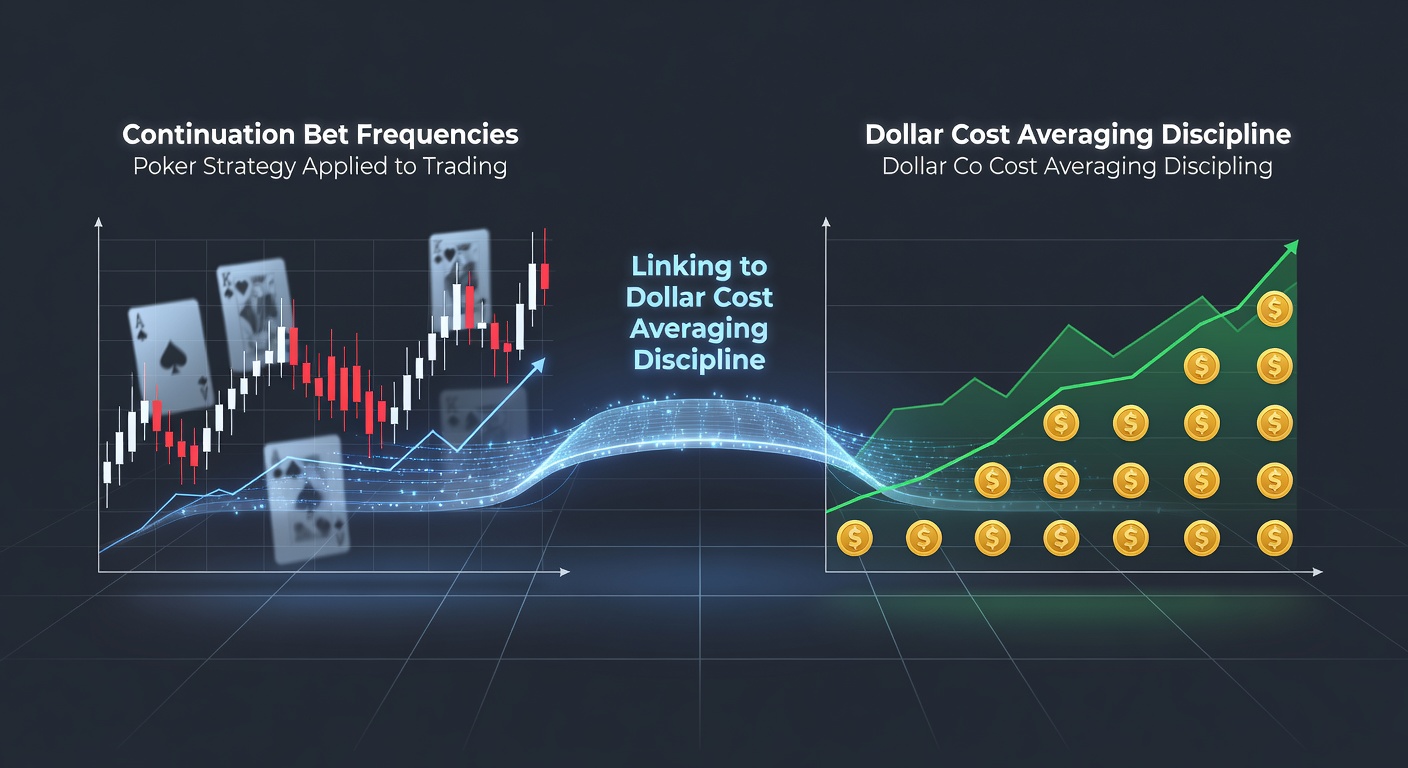
Continuation betting frequencies in poker represent the rate at which players follow through with bets after initiating action preflop, and these metrics connect directly to dollar cost averaging strategies that investors apply when purchasing equities at regular intervals regardless of price fluctuations. Observers note that both practices rely on consistent decision frameworks that balance aggression with restraint, while data from market reports in June 2026 highlighted periods of equity volatility where disciplined investors maintained steady contribution schedules amid fluctuating valuations.
Those who study behavioral patterns in decision-making find that poker players who maintain c-bet frequencies around 60 to 70 percent in specific board textures often demonstrate parallel habits when allocating capital to index funds or individual stocks. Research from academic institutions shows these frequencies emerge from range construction principles that account for opponent tendencies and pot odds, much as dollar cost averaging calculations factor in historical return distributions and contribution timing to mitigate timing risk.
Core Mechanics of Continuation Betting
Continuation bets occur when the preflop aggressor continues betting on the flop, and frequency data compiled across large sample sizes reveals optimal ranges that vary by position and stack depth. Analysts track these percentages through software that processes millions of hands, producing benchmarks where players adjust based on board texture and perceived ranges. Equity markets present similar variables through earnings reports and macroeconomic indicators that influence whether investors maintain or pause their regular purchase schedules.
Studies conducted by research groups at universities in Canada indicate that deviations from established frequencies often correlate with emotional responses rather than updated information, a pattern that surfaces in investor behavior when market corrections prompt changes to planned contribution amounts. Figures from the Bank of Canada during the first half of 2026 documented steady inflows into equity products despite interim price swings, reflecting adherence to predetermined intervals.
Dollar Cost Averaging in Practice
Dollar cost averaging involves committing fixed dollar amounts to equities at consistent time intervals, which reduces the impact of volatility on average purchase prices. Government statistical agencies in Australia have published long-term datasets showing that investors who adhered to monthly contribution plans over ten-year periods captured returns that smoothed out short-term drawdowns compared with lump-sum approaches in certain market regimes. The approach requires discipline to execute regardless of recent performance, a trait that parallels the commitment to continuation betting ranges even after experiencing recent folds from opponents.
Market participants in June 2026 encountered renewed interest in systematic investment plans as equity indices displayed mixed signals following earlier rate adjustments by central banks. Data compiled by the European Central Bank illustrated how regular equity purchases across multiple sectors produced compounded positions that benefited from subsequent recoveries, without requiring precise market timing calls.
Connecting Frequency Discipline Across Domains

Patterns emerge when analysts overlay continuation bet frequency charts with historical dollar cost averaging adherence records, revealing that both domains reward adherence to predefined parameters rather than reactive adjustments. Industry reports from trade organizations in the United States note that investors who automated their contribution schedules achieved participation rates that mirrored the consistency seen among players who precommit to range-based betting strategies before cards are dealt.
Behavioral finance papers published through academic channels demonstrate that deviations in either setting frequently stem from recency bias, where recent outcomes influence the next action more than baseline probabilities warrant. In equity contexts, this manifests as skipped contributions after market dips, whereas in poker it appears as altered c-bet rates following a series of check-folds on particular boards. Cross-referencing these tendencies allows practitioners to identify transferable frameworks for maintaining process-oriented approaches.
Application During 2026 Market Conditions
Equity markets in June 2026 reflected ongoing adjustments to global supply chain data and corporate earnings releases, creating environments where systematic investment plans continued without interruption for those who had established protocols. Observers tracking participation metrics found that accounts following automated dollar cost averaging recorded higher cumulative share counts during periods when prices traded below recent averages. Parallel observations in poker strategy communities show that players who locked in frequency targets ahead of sessions maintained those rates through variance swings rather than chasing adjustments mid-tournament.
Regulatory filings and performance summaries from investment platforms indicate that contribution consistency produced measurable differences in long-term position sizing when compared against discretionary timing attempts. These outcomes align with poker database analyses where fixed frequency strategies outperformed variable approaches that incorporated short-term results into decision trees.
Conclusion
Links between continuation bet frequencies and dollar cost averaging discipline rest on shared requirements for precommitted parameters that resist short-term outcome influence. Evidence from multiple data sources, including central bank statistics and behavioral studies, supports the observation that consistent application across both fields correlates with measurable participation metrics over extended periods. Market conditions observed through mid-2026 reinforced these connections as investors who maintained regular equity allocations navigated price movements without altering core schedules.